Category: How to use Moodle courses
Moodle
Search results: 201
Moodle site to support the all staff consultation for the proposed Academic Framework.
Category: Education Projects

This A-Z Guide
- explains features of good writing
- provides examples taken from real student writing
- is searchable by topic or by subject
Further guidance on academic writing
- Browse the Essex student writing collection
- Signup for (free) Study Skills workshops
Acknowledgements
This guide was made possible thanks to the dedicated work of academic skills tutors in the Talent Development Centre, and above all thanks to the talented Essex students who have allowed their work to be included in the Writing Across the Discipline Collection
Category: Skills for Success
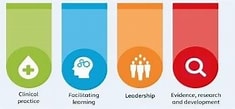
This moodle page is for students that are pursing recognition or are developing in their role as an Advanced Clinical Practitioner (ACP). It provides links to resources relevant to Advanced Clinical Practice and guidance that is relevant to the ACP role.
The MSc Advanced Clinical Practice and the MSc Advanced Clinical Practitioner Apprenticeship programmes have been mapped to the Multi-professional Framework for Advanced Clinical Practice in England and have gained accreditation with the Centre for Advancing Practice. They are intended to be used by those pursuing or developing a career in ACP.
Category: HCP CPD

This Moodle course is mainly for students enrolled in the BA R900 degree or programme, entitled BA in Modern Languages.
Category: Modern Languages (LA)
[Add a brief description of your module to this block. This will help other Moodle users find your module.]
Category: Moodle Baseline
This Moodle course contains reference materials for use by Kaplan Singapore.
Category: BE_KS_18_Ref
This Moodle course contains reference materials for use by Kaplan Singapore.
Category: BE_KS_18_Ref
This Moodle course contains reference materials for use by Kaplan Singapore.
Category: BE_KS_18_Ref
This Moodle course contains reference materials for use by Kaplan Singapore.
Category: BE_KS_18_Ref
This Moodle course contains reference materials for use by Kaplan Singapore.
Category: BE_KS_18_Ref
This Moodle course contains reference materials for use by Kaplan Singapore.
Category: BE_KS_18_Ref
This Moodle course contains reference materials for use by Kaplan Singapore.
Category: BE_KS_18_Ref
Module Code: BE122-5-CO:
Module Title: Financial Reporting and Analysis II
Year: 2025-26
Term: Spring
Level: Undergraduate Level 5
Credits: 15
Requisites for this module
Pre-requisites: None
Co-requisites: BE121
Anti-requisites: None
Key module (requisite for): BE120, BE123
Module Leader, Teaching Staff and Contact Details
Module Leader: Dr Joshua Obeng-Nyarko
Teaching Staff and Contact Details:
1. Dr Joshua Obeng-Nyarko
Email: Jkoben@essex.ac.uk
Office: EBS.3.25
2. Dr Hao Lan
Email: Hao.lan@essex.ac.uk
Office: EBS.3.25
Availability
Available to Incoming Essex Abroad / Exchange students: No
Available to Outside Option: No
Available to Audit: No
Module Description
This module is designed to deepen students' technical expertise in key areas of financial reporting. It focuses on enhancing practical skills in preparing complex financial statements, with an emphasis on cash flows, consolidated accounts, and taxation. The module also explores the finer points of accounting for business combinations, investments, and events after the reporting period. By integrating theoretical knowledge with real-world practice through industry insights, the module aims to bridge the gap between academic learning and practical application, preparing students for advanced professional roles in accounting and finance.
Module Aims
The aims of this module are:
- To provide an in-depth understanding of critical and advanced areas in financial reporting. It is designed to enhance students' technical skills in preparing and analysing complex financial statements, such as statement of cash flows, consolidated accounts, and taxation. The module also delves into the nuances of accounting for business combinations, investments, and post-reporting events, ensuring students are well-versed in the comprehensive and accurate presentation of financial information. By incorporating real-world insights from accounting professionals, the module not only imparts theoretical knowledge but also bridges the gap between academic learning and practical application, preparing students for challenging professional roles in accounting and finance.
- To develop the ability to prepare and interpret Statements of Cash Flows, understanding its significance in assessing the financial health and liquidity of an entity, across two dedicated sessions for an in-depth understanding
Module Learning Outcomes
By the end of this module, students will be expected to be able to:
1. Gain the requisite knowledge in the principles and preparation of consolidated financial statements, including the statement of financial position and comprehensive income, with a focus on accurately reflecting the financial status of a business group.
2. Understand the principles of business combinations, including the treatment of goodwill and impairment processes, as well as the accounting for associates and joint ventures, emphasizing the equity and proportionate consolidation methods.
3. Acquire a detailed understanding of accounting for taxation in financial reporting, covering various tax-related accounting policies and treatments, and gain insights from professionals in the field through a specialized talk.
4. Understand the treatment and disclosure of events occurring after the reporting period and the significance of segmental reporting in providing detailed financial insights into different areas of a business.
Skills for Your Professional Life (Transferable Skills)
Upon completing this module, students will have developed key transferable and subject-specific skills, including:
§ Critically analysing and dealing with challenging issues without complete information, and executing tasks and delivering results with a high level of accuracy.
§ Clearly communicating complex problems, judgments, and potential solutions with greater detail to both specialists and non-specialists.
§ Building confidence in working within a group or team, collaborating with professionals from various backgrounds, articulating ideas, and building crucial relationships.
§ Cultivating integrity and ethical behaviour in any professional field by being well-versed in ethical standards and regulations.
§ Adapting constantly evolving work environment with advancements in new technology and changes in regulations, and transitioning smoothly into various industries by possessing the flexibility to learn and adapt to new environments and technologies.
Indicative Lecture Programme
|
Lecture |
Content |
Readings |
|
1 |
Preparation of Cash Flows Statement I |
IAS 7 Elliott & Elliott, Chap 5 (ER) Melville, Chap 16 (HR) McKeith & Collins, Chap 10 (AR) |
|
2 |
Preparation of Cash Flows Statement II |
IAS 7 Elliott & Elliott, Chap 5 (ER) Melville, Chap 16 (HR) McKeith & Collins, Chap 10 (AR) |
|
3 |
Consolidate Accounts: The principles
|
IAS 28, IFRS 2, 5, 10 and 13 Elliott & Elliott, Chap 22-25 (ER) Melville, Chap 18-20 (HR) McKeith & Collins, Chap 11 (AR) Melville, Chap 18-20 (HR) McKeith & Collins, Chap 11 (AR) |
|
4 |
Consolidated Accounts: 4.1 The Statement of Financial Position.
|
IAS 28, IFRS 2, 5, 10 and 13 Elliott & Elliott, Chap 22-25 (ER) Melville, Chap 18-20 (HR) McKeith & Collins, Chap 11 (AR) |
|
5 |
Consolidated Accounts: 5.1 The Statement of Comprehensive Income |
IAS 28, IFRS 2, 5, 10 and 13 Elliott & Elliott, Chap 22-25 (ER) Melville, Chap 18-20 (HR) McKeith & Collins, Chap 11 (AR) |
|
6 |
Consolidated Accounts: 6.1 Accounting for Associates and Joint Ventures |
IAS 28, IFRS 2, 5, 10 and 13 Elliott & Elliott, Chap 22-25 (ER) Melville, Chap 18-20 (HR) McKeith & Collins, Chap 11 (AR) |
|
7 |
Goodwill and the impairment process |
Elliott & Elliott, Chap 22-25 (ER) Melville, Chap 18-20 (HR) McKeith & Collins, Chap 11 (AR) Melville, Chap 18-20 (HR) McKeith & Collins, Chap 11 (AR) |
|
8 |
Accounting for taxation I |
IAS 12 Elliott & Elliott, Chap 16 (ER) Melville, Chap 15 (HR) McKeith & Collins, Chap 9 (AR) |
|
9 |
9.0 Accounting for taxation II – Talk by an accounting firm |
|
|
10 |
Events after the reporting period and segmental reporting |
IAS 10, IFRS 8 Elliott & Elliott, Chap 4 (ER) Melville, Chap 12 and 24(HR |
|
11 |
REVISION AND EXAM PREPARATION |
Review of workshop and seminar questions |
|
12 |
REVISION WEEK |
|
Learning and Teaching Methods
This module will be delivered via:
§ Ten 2-hour lectures (Weeks 16-25)
§ Five one-hour classes (weeks 16-25)
The lectures will explore the main areas and themes covered in the module. The workshops will be used flexibly depending on the topic covered in the lecture to elaborate or expand on the lecture material or to demonstrate the solution to problems or questions. The material covered in the classes will be drawn from a wide variety of sources such as textbooks, journal articles, learning materials for professional exams, past exam papers etc. As such, the class question for each week will be uploaded on Moodle the week before.
Students are expected to read the references in the reading list and prepare problems and exercises as specified in advance of the classes, so that they can take an active part in discussing the various issues that will be considered in the classes.
Bibliography
All reading lists are available here: http://readinglists.essex.ac.uk/
Essential Textbook:
· Elliott, B. and Elliott, J. (2019) Financial Accounting and Reporting (19th ed.), Harlow: Pearson Education Limited.
Recommended Book Purchases
The following texts provide a useful supplement to Elliot and Elliot (2019):
· Melville, A (2019) International Financial Reporting: A Practical Guide (7th ed.), Harlow: FT/Prentice Hall.
· McKeith, J and Collins, B (2013) Financial Accounting and Reporting (2nd ed.), London: McGrawHill.
· Dunn, J. (2013) Financial Reporting and Analysis, Chichester, Wiley.
NOTE: Where relevant additional readings will be provided during the course of the module.
All reading lists are available here: http://readinglists.essex.ac.uk/.
Assessment Items
Overall Assessment
The module will be assessed by a combination of online tests and examination. The final mark will be:
Main Assessment:
50% of the examination mark, plus
50% of the coursework mark**
**The coursework consists of:
One 50% online test mark to be completed in the Spring term
Reassessment:
Coursework 50% (MyLab Tests) / Exam 50%
Online Test (further details)
The test in the Spring will be an online test using MyAccountingLab. The test will include all topics covered up to the test date. More information on the test will be made
available through Moodle in the course of the term.
Format of Exam Paper
The exam paper will consist of two sections, each containing three questions. Section A will be numerical and Section B, discursive. Students will be required to answer THREE questions altogether – at least one question from each section.
Academic Offences Procedure
For details of the University’s Academic Offences Procedure, see: www.essex.ac.uk/see/academic-offence It is your responsibility to make yourself aware of the Academic Offences Procedure, the regulations governing examinations, and how to correctly reference and cite the work of others.
Additional Support
EBS Student Success
At EBS, your success is important to us, and we want you to reach your potential. The EBS Learning & Teaching Adviser, Fay Aljibory, provides support for all students at the school. You can use this support to have a general discussion on study skills to help you with your programme, to understand feedback on your coursework, to get advice on how to improve your grades, or to talk through any difficulties you are experiencing as a student. You can make an appointment for a 30-minute one-to-one tutorial. Fay also runs practical skills development sessions to help students with their studies. You can contact Fay on f.aljibory@essex.ac.uk or make an appointment. You can also find a wide range of study skills / student resources on Moodle on the EBS Student Success page.
Resources
Teaching materials: Available via Moodle https://moodle.essex.ac.uk/
Listen Again Available
Yes
- Module Supervisor: Joshua Obeng-Nyarko
Category: Essex Business School
This Moodle course contains reference materials for use by Kaplan Singapore.
Category: BE_KS_18_Ref
This Moodle course contains reference materials for use by Kaplan Singapore.
Category: BE_KS_18_Ref
This Moodle course contains reference materials for use by Kaplan Singapore.
Category: BE_KS_18_Ref
This Moodle course contains reference materials for use by Kaplan Singapore.
Category: BE_KS_18_Ref
This Moodle course contains reference materials for use by Kaplan Singapore.
Category: BE_KS_18_Ref
This Moodle course contains reference materials for use by Kaplan Singapore.
Category: BE_KS_18_Ref
This Moodle course contains reference materials for use by Kaplan Singapore.
Category: BE_KS_18_Ref
This Moodle course contains reference materials for use by Kaplan Singapore.
Category: BE_KS_18_Ref
This Moodle course contains reference materials for use by Kaplan Singapore.
Category: BE_KS_18_Ref
This Moodle course contains reference materials for use by Kaplan Singapore.
Category: BE_KS_18_Ref
This Moodle course contains reference materials for use by Kaplan Singapore.
Category: BE_KS_18_Ref
This Moodle course contains reference materials for use by Kaplan Singapore.
Category: BE_KS_18_Ref
This Moodle course contains reference materials for use by Kaplan Singapore.
Category: BE_KS_18_Ref
This Moodle course contains reference materials for use by Kaplan Singapore.
Category: BE_KS_18_Ref
This Moodle course contains reference materials for use by Kaplan Singapore.
Category: BE_KS_18_Ref
This Moodle course contains reference materials for use by Kaplan Singapore.
Category: BE_KS_18_Ref
This Moodle course contains reference materials for use by Kaplan Singapore.
Category: BE_KS_18_Ref
This Moodle course contains reference materials for use by Kaplan Singapore.
Category: BE_KS_18_Ref
This Moodle course contains reference materials for use by Kaplan Singapore.
Category: BE_KS_18_Ref
This Moodle course contains reference materials for use by Kaplan Singapore.
Category: BE_KS_18_Ref
This Moodle course contains reference materials for use by Kaplan Singapore.
Category: BE_KS_18_Ref
This Moodle course contains reference materials for use by Kaplan Singapore.
Category: BE_KS_18_Ref
This Moodle course contains reference materials for use by Kaplan Singapore.
Category: BE_KS_18_Ref
This Moodle course contains reference materials for use by Kaplan Singapore.
Category: BE_KS_18_Ref