Fleeing the Nazis in 1940, the Marxist critic Walter Benjamin wrote that ‘even the dead will not be safe from the enemy if he wins. And this enemy has not ceased to be victorious.’ For Benjamin, recovering authentic history and contesting myths about the past was literally a matter of life and death as lack of proper historical awareness had aided Hitler’s rise to power. He recommended rubbing history ‘against the grain’ to uncover movements and ideas pushed to one side by dominant groups that sought to define what counts as history and what meanings it conveys. This module rubs modern British history ‘against the grain’ to uncover hidden narratives of the national past that have been largely and deliberately forgotten. Instead of looking at British history from a ‘top-down’ perspective that focusses on the lives of the rich and powerful or the triumphant rise of the nation state, we will study some of the ways in which working-class women and men, imperial subjects, black immigrants and other marginalised groups experienced and made sense of the past on their own terms.
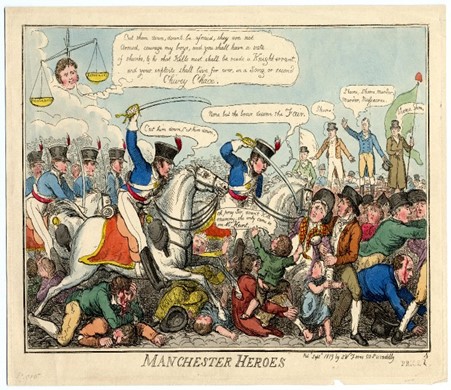
The histories taught in schools and discussed in the public realm often tell us about the past experiences of dominant groups – and the fact that these histories are so prominent might also suggest why those groups still hold power. Approaching the past from the perspective of those ‘hidden from history,’ this module uncovers ideas and experiences often overlooked in traditional accounts of modern Britain. Starting in the period of the industrial revolution, it begins by studying E. P. Thompson’s influential book, The Making of the English Working Class (1963), one of the founding texts of ‘history from below’ in Britain. The radical movements studied by Thompson highlighted power imbalances between the social classes and between men and women, in the private and public spheres. Taking a chronological approach, Hidden Histories then looks at how the working class, women, and immigrants created their own vibrant cultures. The module foregrounds histories of protest, resistance and liberation – and shows that these hidden histories are essential to understanding modern Britain.
- Module Supervisor: Peter Gurney